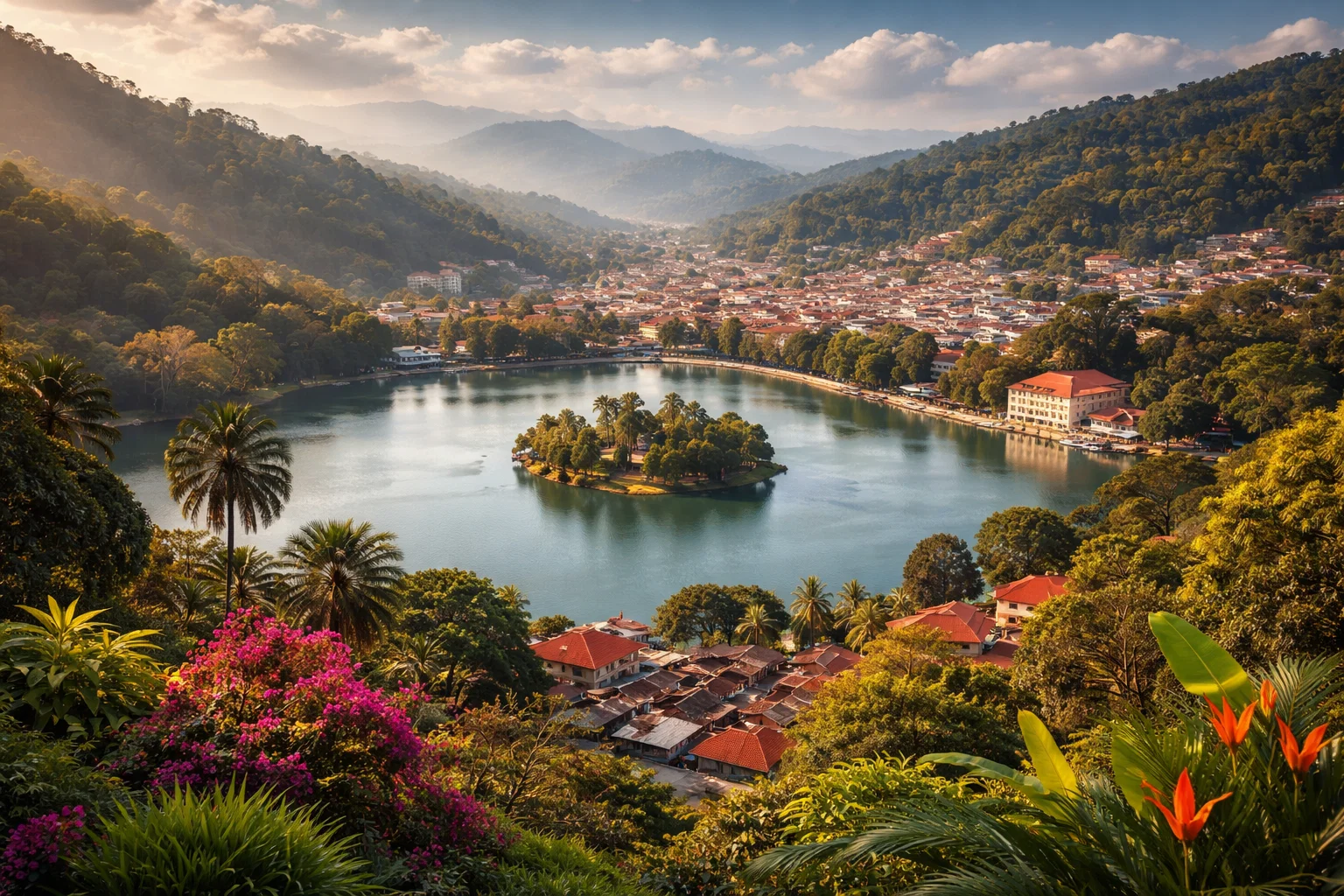
For the modern expat, Kandy is often described as the “temperate alternative” to Colombo’s humid chaos. But as the world shifts and Sri Lanka’s 2026 Digital Nomad Visa matures, the question isn’t just about the weather – it’s about the wallet.
Is Kandy still an affordable “Urban Castle,” or has the hill country’s popularity driven prices into the clouds?
In this exhaustive breakdown, we look at the reality of living in Kandy in 2026. Whether you are a solo nomad, a retiring couple, or a family seeking a base for international schooling, here is what it actually costs to maintain a high-standard lifestyle in the hills.
1. The Core Pillar: Housing & Accommodation
Housing will be your largest single expense. In Kandy, “Expat Standard” means more than just four walls; it means high-speed fiber availability, backup generators (essential for mountain-zone stability), and accessibility that doesn’t involve a 20-minute tuk-tuk climb on a muddy road.
Monthly Rent Benchmarks (2026)
| Property Type | Monthly Rent (LKR) | USD Equivalent |
| City Center Studio (Modern) | 85,000 – 110,000 | $275 – $350 |
| 2BR Apartment (Anniewatta/Primrose) | 140,000 – 220,000 | $450 – $710 |
| Luxury 3BR Villa with View | 250,000 – 450,000 | $800 – $1,450 |
| Gated Community (Digana) | 180,000 – 300,000 | $580 – $970 |
The “Urban Castle” Strategy: Long-term leases (1 year+) in neighborhoods like Anniewatta or Hantana offer the best value. Landlords typically ask for 3–6 months’ deposit. In 2026, many landlords are familiar with the Digital Nomad Visa and may offer “all-inclusive” monthly packages for a 15% premium to cover electricity and high-speed web.
2. Powering the Fortress: Utilities & Connectivity
Kandy’s climate is significantly cooler than the coast, meaning your AC usage will likely be 50% lower than in Colombo. This is a massive hidden saving.
- Electricity: For a mid-range apartment with one AC unit (used only at night) and a home office, expect to pay LKR 12,000 – 25,000 ($40 – $80).
- Water: Remarkably cheap. Usually under LKR 1,500 ($5) per month.
- Fiber Internet: Essential for nomads. An unlimited 100Mbps SLT Fiber package runs about LKR 8,000 – 12,000 ($25 – $40).
- Mobile Data: Sri Lanka remains one of the cheapest places for data. A 50GB 5G plan costs roughly LKR 3,000 ($10).
3. The Marketplace: Food & Groceries
This is where the “local vs. expat” price gap is widest. If you shop at Keells or Cargills Food City and buy imported cheese, Australian wine, and Italian pasta, your bill will rival London or New York.
The Grocery Basket (2026 Prices)
- Milk (1L): LKR 400 ($1.30)
- Eggs (Dozen): LKR 550 ($1.80)
- Chicken Fillets (1kg): LKR 1,800 ($5.80)
- Rice (1kg, Premium): LKR 280 ($0.90)
- Domestic Beer (Lion Lager 500ml): LKR 750 ($2.40)
- Imported Bottle of Wine: LKR 4,500+ ($14.50+)
Pro Tip: Use the Kandy Municipal Market for fresh produce. A week’s worth of vegetables for a couple costs less than LKR 4,000 ($13) if you buy local and seasonal.
4. Dining Out & Entertainment
Kandy’s food scene has evolved. While “Rice and Curry” spots are everywhere, the “Castle” lifestyle demands the occasional brunch or high-end dinner.
- Local Lunch (Rice & Curry): LKR 400 – 800 ($1.30 – $2.60)
- Mid-Range Café Meal (Burger/Pasta + Coffee): LKR 3,500 – 5,000 ($11 – $16)
- Fine Dining (Kandy City Centre or Boutique Hotel): LKR 8,000 – 12,000 per person ($25 – $40)
- Cappuccino: LKR 900 ($2.90)
5. Movement: Transport & Logistics
Unless you plan to navigate the chaotic traffic yourself, you will rely on the “Three-Wheeler” (Tuk-tuk) or ride-hailing apps.
- PickMe/Uber (Tuk-tuk): LKR 150 start + LKR 100 per km. A cross-city trip is usually LKR 500 – 800 ($1.60 – $2.60).
- Private Car with Driver (Day Trip): LKR 12,000 – 18,000 ($38 – $58) plus fuel.
- Monthly Fuel (Scooter): If you rent a scooter for $100/month, fuel will only cost you about LKR 5,000 ($16) due to Kandy’s compact size.
6. Health & Wellness
As of 2026, the Sri Lankan government requires long-term visa holders to have valid health insurance.
- Private GP Consultation: LKR 2,000 – 4,000 ($6.50 – $13) at hospitals like Asiri or Lakeside Adventist.
- Gym Membership: A high-end gym (with pool access) costs LKR 10,000 – 18,000 ($32 – $58) per month.
- Expat Health Insurance: Depending on age and coverage, expect $400 – $900 per year for a solid international plan with local private hospital coverage.
7. The Monthly “Urban Castle” Budget (Summary)
Based on 2026 data, here are three realistic tiers for living in Kandy.
Tier 1: The Lean Nomad (Solo)
- Rent (Studio/Annexe): $250
- Food (Mostly local/Home cooked): $200
- Transport & Misc: $100
- Utilities: $50
- Total: $600 / month
Tier 2: The “Urban Castle” Standard (Couple)
- Rent (2BR Modern Apt): $600
- Food (Mix of Supermarket & 2 Dining out/week): $450
- Transport (Frequent Taxis): $150
- Utilities & Fiber: $120
- Wellness/Gym: $80
- Total: $1,400 / month
Tier 3: Luxury & Family (Family of 4)
- Rent (Villa with Garden): $1,200
- Food (Imported goods & regular Dining): $800
- Schooling (International School fees): $400 – $700
- Private Driver/Transport: $250
- Utilities & House Help: $200
- Total: $2,850 – $3,150 / month
The Verdict: Is Kandy Affordable?
Compared to Bali ($2,000+ for a “Standard” expat life) or Lisbon ($3,500+), Kandy remains an incredible arbitrage opportunity. For $1,500 a month, a couple can live in a beautiful hilltop apartment, eat well, travel frequently, and still save.
However, the “cheap” Kandy of 2019 is gone. The 2026 reality is a professionalized market where quality costs money, but the value-for-money ratio remains one of the best in South Asia.